WBE
Call Us Email Us
Adelaide Environmental Health
  • About Us
    • About Adelaide
    • Our Customers
  • Services
    • Our Services
    • Asbestos
    • Lead
    • Mold
    • PCBs
  • Resources
  • Blog
  • Contact
WBE
Call Us Email Us

7 Asbestos Planning Priorities Before Summer School Renovation Projects

January 20, 2022 by Alan Fleming

For New York school districts, summer break is much more than vacation—it’s the busiest construction season of the year.
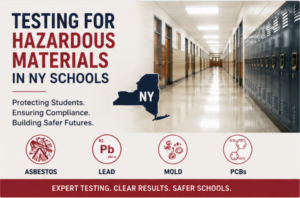
Unfortunately, summer construction also creates the greatest potential for disturbing asbestos-containing materials. With only a few short months to complete projects before students return, environmental planning needs to happen early.

Whether you’re a Superintendent, Business Official, Facilities Director, Building Administrator, or Director of Buildings and Grounds, here are seven asbestos planning priorities that can help keep your projects compliant, on schedule, and ready for opening day.

1. Review Every Planned Summer Construction Project

Begin by identifying every project scheduled before students return. Even relatively small jobs—such as replacing flooring, upgrading HVAC equipment, installing electrical systems, replacing ceilings, or renovating restrooms—may disturb asbestos-containing materials. Reviewing each project’s scope early helps determine whether additional environmental evaluation is needed before work begins.

2. Confirm Required Asbestos Surveys Have Been Completed

One of the most common causes of construction delays is discovering suspect asbestos-containing materials after contractors have already mobilized. Completing asbestos surveys before bidding and construction allows project teams to understand existing conditions, develop accurate specifications, and avoid costly surprises once demolition begins.

3. Verify AHERA Compliance and Building Records

Summer is an excellent time to review your district’s AHERA management plans, inspection records, and asbestos documentation. Districts should confirm that they continue to meet the AHERA requirements for schools, including maintaining current management plans, required inspections, periodic surveillance, and annual parent and staff notifications. Confirm that required records are current, management plans reflect recent work, and any previous response actions have been properly documented. Well-organized records make future projects easier to plan and help demonstrate ongoing compliance..

4. Schedule Any Required Abatement Before Other Trades Begin

If asbestos-containing materials must be removed or otherwise managed, those activities should be coordinated early in the construction schedule. Completing abatement before general demolition and renovation work allows other contractors to proceed more efficiently while reducing the risk of project delays during the limited summer construction season.

5. Plan Carefully for Occupied Buildings

Not every project is completed before students return. Athletic facilities, phased renovations, emergency repairs, and larger capital improvements may continue after portions of the building become occupied. Careful planning helps minimize disruption while protecting students, faculty, staff, and visitors throughout the construction process.

6. Evaluate Indoor Air Quality Before Reopening

Construction activities can affect indoor air quality through dust, demolition, material removal, and HVAC work. Depending on the project, districts may benefit from indoor air quality evaluations or project air monitoring before classrooms reopen. Verifying that building environments are ready for occupancy provides confidence for administrators, teachers, parents, and the community.

7. Coordinate Early with Your Environmental Consultant

The most successful summer construction projects begin with early communication. Architects, engineers, contractors, school administrators, and environmental consultants all play important roles, but the best outcomes occur when environmental planning is integrated into the project from the very beginning. Early coordination helps ensure surveys, laboratory analysis, notifications, and any required asbestos work fit seamlessly into the overall construction schedule.

Successful School Projects Begin Long Before Construction Starts

For most school districts, the deadline isn’t flexible: students arrive on opening day whether construction is finished or not. That’s why proactive asbestos planning is so important. Identifying potential issues early allows districts to develop realistic schedules, avoid unexpected delays, and complete projects with greater confidence.

At Adelaide Environmental Health, we work with school districts throughout New York to provide asbestos surveys, AHERA support, air monitoring, industrial hygiene services, and environmental consulting that help schools complete renovation projects safely and efficiently. If your district is planning summer construction or preparing next year’s capital improvement projects, involving your environmental consultant early can help keep your project—and your school year—on schedule. Contact us if you have any questions.



Filed Under: Asbestos

Managing Remediation Waste From Polychlorinated Biphenyls (PCBs) Cleanups

January 20, 2022 by Alan Fleming

Accurate monitoring during the PCB remediation waste process is critical to ensure regulatory and safety codes are followed. Zero tolerance can be afforded to guarantee the safe and secure removal of the hazardous material.

Read Entire Article


Published on https://www.epa.gov

Filed Under: PCBs

Review of PCBs in US Schools: A Brief History, Estimate of the Number of Impacted Schools, and an Approach for Evaluating Indoor Air Samples

January 20, 2022 by Alan Fleming

As a partner with school districts across the state, the presence (and danger) of PCB’s in learning environments is a serious concern for us. Schools must be aware and ensure they are within the limits of health-based PCB levels.

Read Entire Article


Published on https://www.ncbi.nlm.nih.gov

Filed Under: PCBs

Pollution Reaches Earth’s Deepest Trench — And Never Leaves

January 20, 2022 by Alan Fleming

In a word, fascinating! Read about one of the most challenging PCB remediation sites we’ve heard about, The Mariana Trench:

Read Entire Article


Published 6/21/2016 on http://blogs.discovermagazine.com

Filed Under: Customers

Polychlorinated Biphenyl (PCB)

January 20, 2022 by Alan Fleming

Study on PCBs in New York Public Schools

Read Entire Article


Published on https://www1.nyc.gov

Filed Under: PCBs

A Brief Guide to Mold in the Workplace

January 20, 2022 by Alan Fleming

Familiarity with mold in the workplace and how to address it is important to the health and safety of anyone who becomes exposed to it. Adherence to OSHA guidelines, some of which are in this article (as well as other federal and state regulations) increases likelihood of the best possible outcome:

Read Entire Article


Updated 11/8/2013 on https://www.osha.gov

Filed Under: Mold

Understanding Inspection, Risk Assessment, and Abatement

January 20, 2022 by Alan Fleming

Understanding the health risks of lead in the environment is critical; addressing its presence is even more so. Adelaide’s inspectors are licensed professionals well-trained to identify risk locations and recommend proper means for abatement. Education is paramount for all associates and we prioritize certification for all of our employees

Read Entire Article


Published on https://www.epa.gov

Filed Under: Lead

Public Health Week: Get the Lead Out

January 20, 2022 by Alan Fleming

Throughout 2016, Adelaide was deeply involved in testing the water in numerous school districts; especially when this new law started last September. We know the importance of these regulations firsthand and will continue to work closely with the districts to ensure a safe water environment for all schools.

Read Entire Article


Published 4/10/2017 on http://www.gothamgazette.com

Filed Under: Lead

New York Cracks Down On Illegal C&D Dumping

January 20, 2022 by Alan Fleming

Regulation enforcement ensures the health and safety of the citizens of the state of New York. At Adelaide, we take great pride in facilitating the safe identification and remediation monitoring of asbestos and other hazardous materials

Read Entire Article


Published 2/22/2017 on http://www.cdrecycler.com/

Filed Under: Asbestos

Thoughts On Selecting The Right Hazardous Material Abatement Company

January 20, 2022 by Alan Fleming

The discovery of hazardous materials in a building – especially one used by the public – can create anxiety and confusion in determining the best route to address the problem. There are issues of logistics, building use, liability, regulatory compliance and, of course, cost.

Here in New York, the range of companies that offer abatement or remediation services is so varied that wading through the options presents yet another layer of complexity. As a business with over three decades of hazardous material detection, eradication planning and solution monitoring, we’ve worked with just about every abatement company in the New York Area which puts us in a unique position to offer some perspective on what characteristics generally elevate an abatement company to the top of the pack.

When hiring an abatement or remediation company, we advise our clients to evaluate candidate companies based on the following

  • Sufficient Experience – there is a learning curve in this business; a company that has been operating for less than five years more than likely hasn’t climbed that curve yet. This is especially important if you think there is something uniquely challenging about the circumstances associated with your situation.
  • Owner/Partner Participation – after their owners or partners deliver cost estimates for projects, many abatement companies hire subcontractors to do the actual work. Our experience is that jobs always go better when the owners or operators take an active role in the work.
  • Provides a Variety of Services – Is the company qualified (and certified!) to do abatement for substances beyond the issue at hand. More often than not, especially in older buildings, the presence of one substance is not isolated and indicates other substances may be at hand. Being certified for multiple substances increases efficiency.
  • Amply Insured – Does the company have solid insurance coverage beyond meeting the legal requirements? If their policy doesn’t include pollution and errors/omissions coverage, their mistakes could become your (significant) problems.
  • Recommends Second Party Job Clearance – this may seem self-serving but it’s without a doubt a best practice. Make sure the company you hire to remove the hazardous material is not the same company you’ve hired to detect the problem and then monitor the removal. If your abatement company is also responsible for monitoring the abatement, it’s somewhat akin to “the fox guarding the henhouse”, as we like to say.

If you are interested in a second opinion on this topic, the Environmental Protection Agency has a nice post on their website about this. If you’d like to discuss your potential hazardous material situation, contact us for a non-obligation consultation.

Filed Under: Misc, Resource

  • Next Page →
Adelaide
Adelaide
All rights reserved
WBE
  • About Us
  • Services
  • Resources
  • Blog
  • Contact

Follow Us

Facebook LinkedIn

Locations

Downstate / NYC
Metropolitan Area

1511 Route 22, Suite C24
Brewster, NY 10509
Phone: 845.278.7710
Fax: 845.278.7750

Midstate
90 State Street, Suite 700
Albany, NY 12207
Phone: 518.874.0617

Upstate / Western NY
1967 Wehrle Drive, Suite One
Buffalo, NY 14221
Phone: 716.402.4580

Site by Voncor Communications